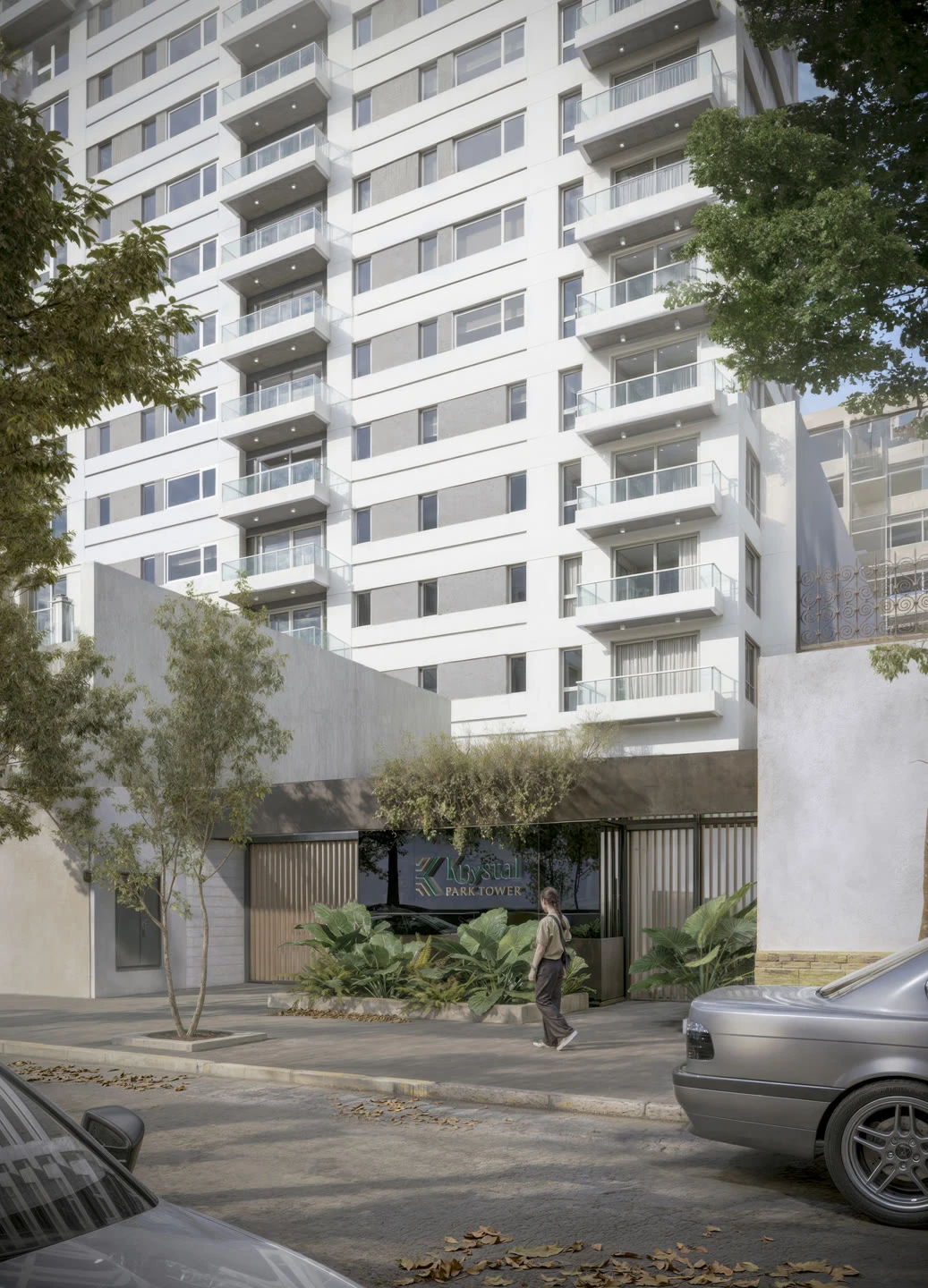
The hardest moment of a real estate sale isn't negotiating the price. It's convincing someone to put real money down for something that doesn't yet exist. That's pre-sale, off-plan — and in that context, the render isn't visual support. It's the product.
The buyer can't walk through the building, can't touch the granite countertop, can't look out from the balcony. The only thing they have is the image. If that image doesn't convince, there's no price, no location and no argument that closes the deal.
Why the image is the sales argument, not the complement
In pre-sales, the image does the job that physical property does in a traditional sale. It has to answer all the questions the buyer can't resolve themselves: how will it look from outside? How does light enter the living room? How much real space does the master bedroom have? Is it worth what they're asking?
An image that doesn't answer those questions isn't neutral. It generates doubt. And in pre-sales, doubt always wins over enthusiasm.
In pre-sales, the render doesn't illustrate the project. It is the project to whoever's buying.
That changes how the brief should be thought about. It isn't about showing the finished building: it's about building the conviction that it'll be worth waiting two or three years to live there.
What separates a render that sells from one that doesn't convince
We work with several real estate development teams and the difference usually isn't in the technical quality of the render. It's in what they decided to show — and how.
It shows the lifestyle, not the building.
The buyer doesn't buy square meters. They buy an image of their future life in that space. The render that works in pre-sales has people, has light from a specific moment of the day, has details that make the space look inhabited. It's not a technical catalog: it's a scene the buyer wants for themselves.
Human scale orders everything.
Without people or recognizable scale elements, the buyer can't make the mental calculation of how big the space is. A living room that looks huge on plan can read as cramped in a poorly framed render — and a modest one can feel generous if the scene is well resolved. Human scale isn't an aesthetic detail: it's the difference between the price feeling fair or excessive.
The framing sets the argument.
Each pre-sale image has to answer a specific question. The exterior: how will it stand out on the street? The living room interior: how bright is it? The view from the balcony: what do you see? The contextual aerial: where is it and what surrounds it? If the framing isn't designed to answer that question, the image works against the sale.
Materiality has to be credible, not perfect.
An overly idealized render generates distrust. Today's buyer — especially the investor — knows how to tell the difference between an aspirational image and an unrealistic promise. The best pre-sale renders we've made have small intentional imperfections: light bouncing in a particular way, concrete that isn't identical to the factory sample. That makes the image true.
The minimum set for a pre-sale campaign
There's no magic number, but there is a logic. These four images are the functional floor of any campaign — below this, the campaign works lame.
- Daytime exterior — building identity. The image that goes on signage, the brochure and publications. It has to establish in seconds what kind of building it is and who it's aimed at. It's the image the buyer will remember.
- Typical unit interior — price justification. The living room or the space that best represents the value proposition of the units. With an inhabited scene, evening light, credible materials. It's where the buyer calculates whether it's worth what it costs.
- Contextual aerial — location and surroundings. Shows where the building sits in relation to the neighborhood, services, green space. For buyers who don't know the area well — and especially for remote investors — this image is decisive.
- Atmosphere image — for social media and digital campaigns. An illuminated night, a sunrise, an architectural detail with dramatic light. Not the most informative image, but the one that stops the scroll the most. A digital campaign without this loses 60% of its organic reach.
From that base set, each project adds depending on its differentiators: if there are amenities that justify the price, they need showing; if the project has exceptional views, they need exploiting; if the typology is the differentiator, more images need to be devoted to it.
The most frequent mistake: the render that arrives late
The mistake we've seen most often in developments that struggled to start sales wasn't an image mistake. It was a timing mistake.
The correct sequence is: render first, then pre-sales. The sequence that frequently happens is the reverse: pre-sales opens with provisional images or references from other projects, and the renders are commissioned when there's already pressure on sales. By that point, the first impression has already happened — and generally not the one the development deserved.
The full process from first briefing to delivery of campaign-ready images takes between three and six weeks, depending on project complexity. That means the commission has to happen before the sales team needs the images, not at the same time.
The pre-sale image that arrives late doesn't replace the one that wasn't there. It coexists with it — and the second one always seems better than the first.
What material you need to have ready to commission
You don't need the executive design finalized. You do need clarity about what's being sold. In practice, the minimum brief to start working on pre-sale renders includes:
- Updated plans and elevations — even if schematic. Whatever has the definitive state of the form.
- Material palette — even if preliminary. A reference for plaster, joinery, flooring. Without this, the render can look pretty but not represent the real product.
- Clarity on the target buyer — a developer aiming at first-home buyers isn't the same as one aiming at investors. The framing, the scene and the level of detail change completely.
- Intended use of the images — site signage, printed brochure, social media, real estate portal. Each format has different resolution and composition requirements.
- Real launch deadline for pre-sales — not the optimistic deadline. The day the sales team needs to have the images in hand.
Pre-sale renders and investors: the special case
When the target audience is the investor — local or international — the criterion changes in one critical point: the investor doesn't buy lifestyle, they buy return. But the render still has to convince them.
What a render has to communicate to an investor isn't "how nice it is to live here" but "this is a serious, well-executed product that will perform." That's transmitted with high-quality materiality, well-contextualized environment, details that show the project is thought through. A careless render — even of an excellent project — communicates carelessness. And the investor reads it that way.
For developments aimed at Miami investors or European buyers, this multiplies: the remote buyer doesn't know the neighborhood, has no local reference, and will make the decision almost exclusively based on the images. In that context, the render isn't sales support. It is the sale.
One last honest note about pre-sale renders
The render doesn't perform miracles. If the project has a real problem — price, location, typology — the image won't solve it. What it can do is make a good project be perceived as excellent, and an excellent one sell in the first days of pre-sales instead of in the last months.
That difference — selling fast at asking price versus selling slowly at a discount — usually represents several margin points for the developer. At that scale, the cost of the render is irrelevant compared to the cost of not having it right.
If you have a development in pre-sales or about to start, the moment to talk is now — not when sales is already working with provisional references.