If you Google "how much does an architectural render cost," you'll find scattered figures — between a hundred and several thousand dollars per image — without any context. That dispersion isn't random. It's the symptom of a poorly framed question.
When someone tells you "a render costs X dollars" without having looked at your project, they're quoting their standard time, not your image. And for a project worth showing, that's almost never enough.
Why a single figure is suspicious
A render isn't a catalog product. Two images of the same building can cost twice, half, or ten times each other depending on the brief. A portrait of a single-family home at six in the evening isn't the same as a full campaign to sell a forty-unit multifamily development.
When you hear a closed figure without questions, it usually means one of three things:
- The studio quoted high to cover themselves, and will do the minimum to make the number close.
- The studio quoted low because they didn't yet understand what you were asking, and will show up with add-ons mid-process.
- The studio actually works in standard units — and they'll deliver a standard unit.
None of these is the conversation you need if the project matters.
The price of a render doesn't start with the 3D file. It starts with what you'll do with the final image.
The 7 variables that move the budget
These are the variables that, in our experience, actually change the number. Any serious studio will ask about them before quoting. If they don't, doubt.
Project scale
A single-family home, an apartment building, a master plan. Scale defines modeling volume, environment complexity, and the number of framing decisions.
Number of images
It isn't linear. The first image carries all the modeling and setup work; the fifth is much cheaper than the first. That's why packages make sense.
Level of detail
A conceptual volumetric render isn't the same as an image for a commercial campaign where every material, every joint and every shadow has to be resolved.
Type of deliverable
Still image, fly-through video, 360° tour, virtual reality experience. Each multiplies the work in different ways — a video isn't ten renders; it's a different trade.
Deadline
The same work in four weeks or in five days doesn't cost the same. Urgency displaces other projects and gets paid for what it is.
Environment complexity
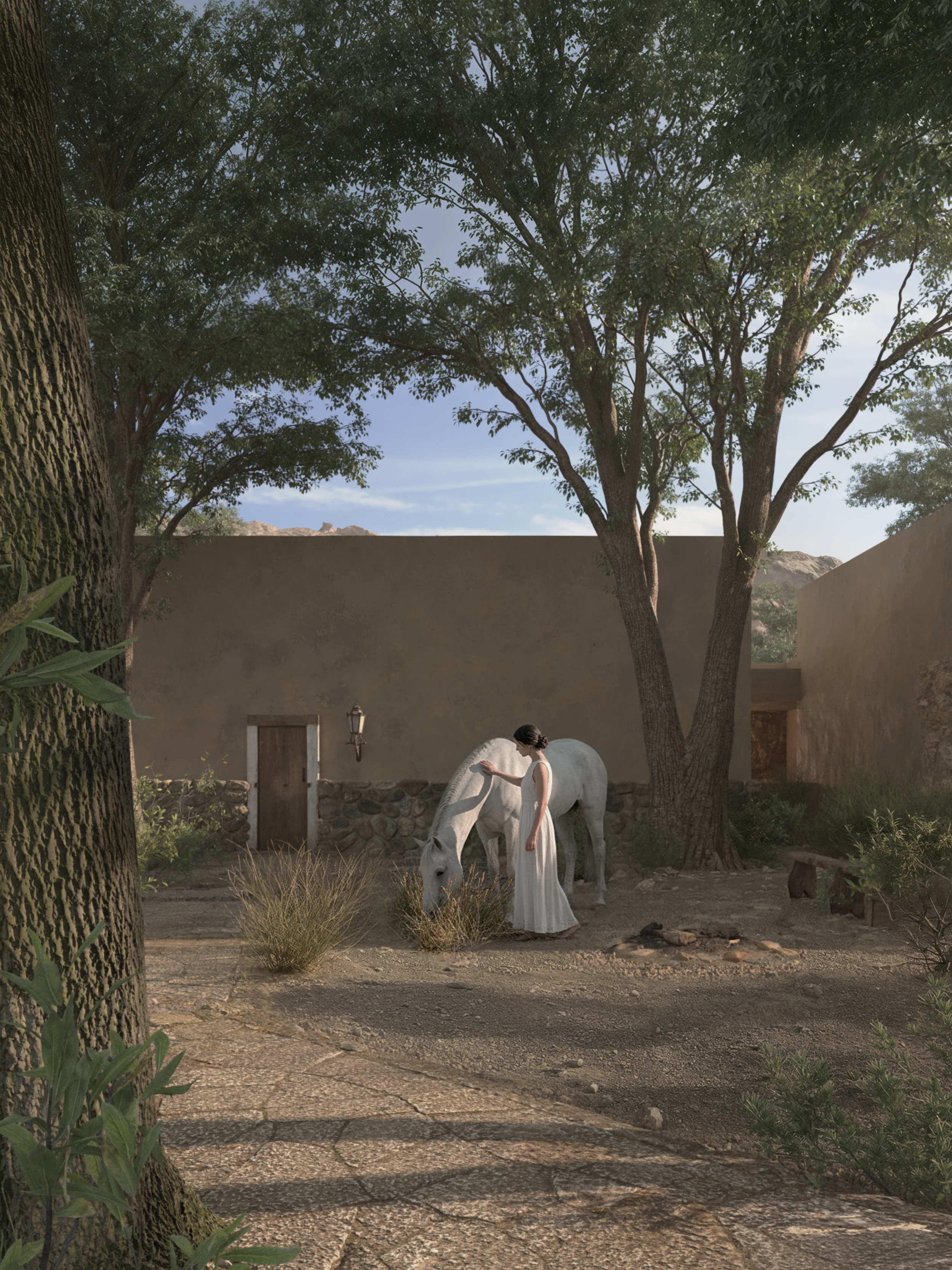
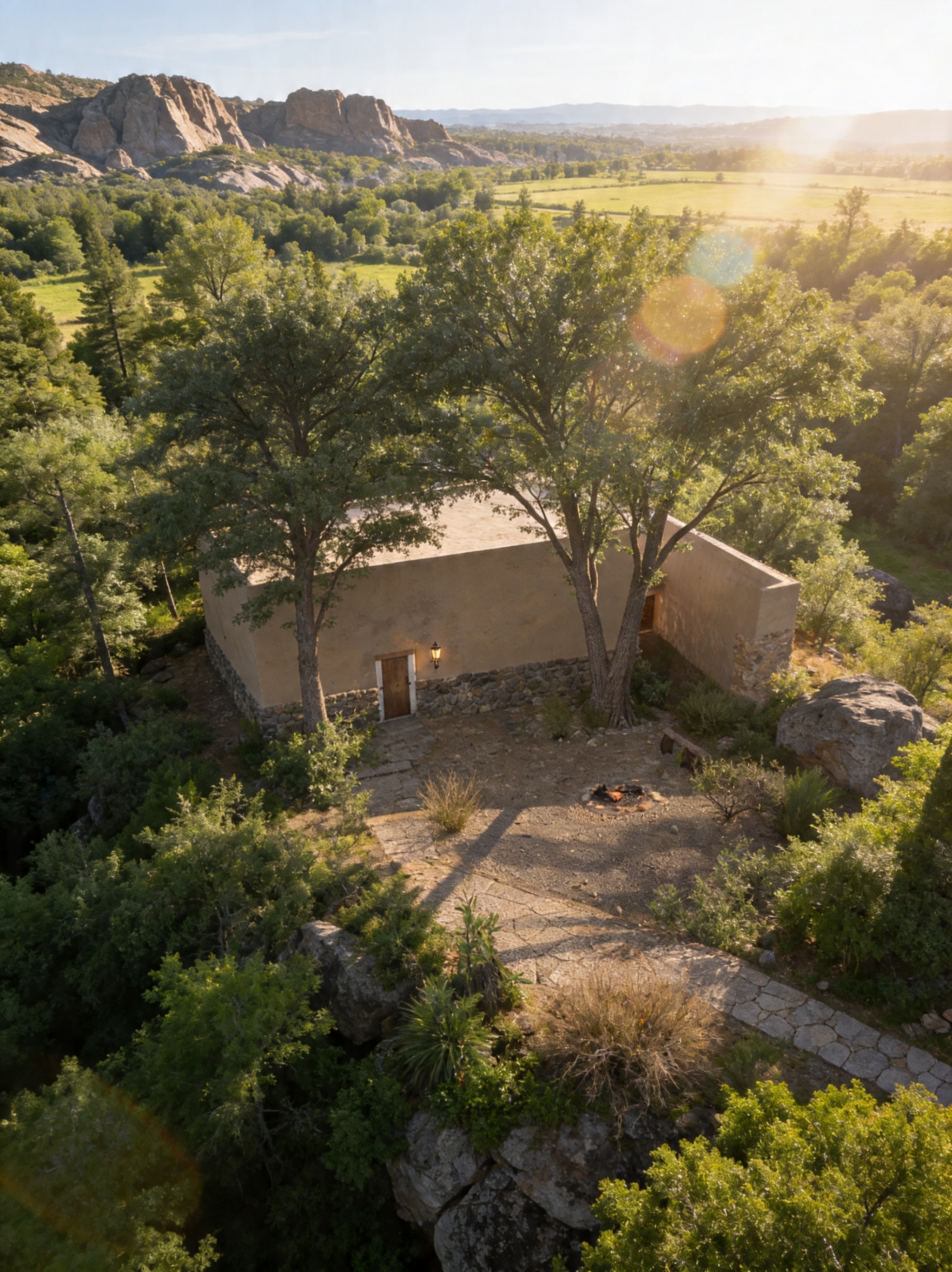
An isolated rural project is resolved with the landscape. An urban project forces you to model the block, the intersection, the neighbors. Environment is half the atmosphere.
Definition level of source material
Updated plans with sections and defined materials are a different starting point than preliminary documentation. The difference is paid — either in our time, or in your time clearing up doubts.
Change any of the seven and the number changes. That's why a serious quote is never a two-line email.
The three types of commission
In practice, projects that come into the studio fall into three shapes. They're not closed packages; they're modes of framing the conversation.
Exploratory commission
Two or three images for an early project stage. Useful to sell an idea to a client, for a smaller competition, or to start communicating a project that's still being defined. There's no campaign behind it; there's a specific decision to unblock.
Project presentation
The most common case. Four to eight images that tell the full project: exteriors, key interiors, a contextual aerial. Useful for client presentation, a serious competition, editorial publication (ArchDaily, Dezeen), or an investor pitch. It's where Architect-Led work shows the most because each framing carries part of the argument.
Commercial campaign or developer package
Multifamily developments, hotels, real estate ventures. Eight to twenty images, plus video, plus 360° tour, plus material for social and press. Here the visual coherence of the whole matters as much as each individual image — that's why it's not advisable to buy it fragmented across different vendors.
Placing the project in one of these three types orders the conversation before talking numbers. Often the first value the studio adds is helping you choose which type you're really in — it's not always the one you had in your head.
What to have ready before requesting a quote
A precise quote needs precise information. Before asking for numbers, it helps to have on hand:
- Updated plans, sections and elevations — even if preliminary, what you have. You don't need everything finalized; you do need to know where you stand.
- A tentative material palette — a reference photo, a moodboard, a couple of samples. Atmosphere starts here, not in the render.
- Visual references — images you like and, especially, images you don't. The second tends to be more useful than the first.
- Clarity on final use — social media? print publication? investor pitch? competition? The use defines format, resolution, quantity.
- A real deadline — not the "if you can earlier, even better." The actual deadline, the day you have to present.
With that, a serious studio can quote in twenty-four to forty-eight hours with a number that won't move much. Without it, any number is a guess.
One last honest note
At Arcando Visual we don't work by volume and we don't do catalog. If you're looking for one-off renders by image, at the lowest possible price, we're probably not your studio — and that's fine. There are very good vendors for that work.
Where we are a good conversation is when the image has to do something: win a competition, sell a development, accompany a publication, convince an investor. There the variable that changes the result isn't the per-image figure: it's who's framing the shot.
We don't charge for the file we deliver. We charge for the decisions behind it.
If you want to discuss a specific project, write to us with whatever material you have on hand. The first reply — before any number — will be a criterion: which images make sense, which don't, and in what order. That map is usually what orders everything that follows.