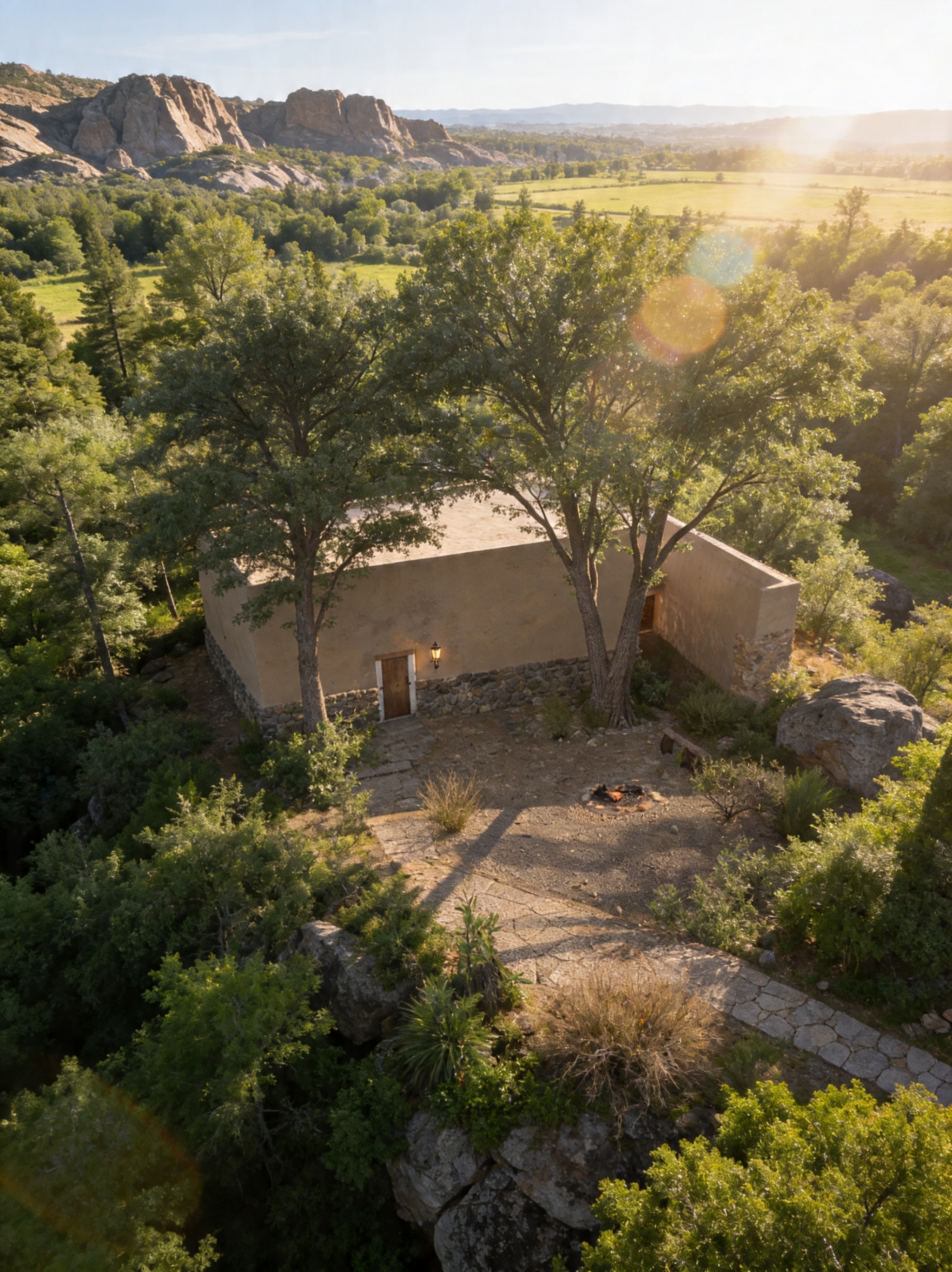
Fifteen years ago, rendering was a technical specialty. The architect finished the project, printed the model, and — if the presentation justified it — sent it out to be rendered. The render artist was a vendor: received files, returned images, billed by deliverable. Nobody expected them to know why that window was placed where it was.
Today that role split into two trades that still go by the same name.
The render trade split in two
On one side, the image factory. Studios that streamlined the process into an assembly line: fast modeling, standard lighting, automated post-production, per-unit pricing. They're efficient. They handle volume. There's a market for that.
On the other side, the studio that thinks the image as part of the design. Where the person framing a shot understands scale, circulation, materiality. Where the image is not a final product: it's a continuation of the project by other means.
That second path is what we call Architect-Led Visualization.
What it is NOT
Architect-Led isn't a specific software. It isn't a particular workflow. It isn't a recognizable visual style. If it were any of those things, it would be replicable.
It also isn't "a studio with architects on the team." There are huge render factories with twenty architects working flat out to meet deadlines. That's not the criterion.
Architect-Led isn't bought with a degree. It's exercised through a decision.
What it actually is
It's a stance: the person framing each image of the project understands how the project works. They don't replicate what they were sent; they interpret what was being sought.
That changes specific things:
It changes the initial conversation.
We don't ask for "the files." We ask what you felt when you designed it, what you wanted someone to notice on entering, what compromise you had to resolve on site. That information orders everything that follows.
It changes the framing.
A technical render artist looks for the angle that looks good. An Architect-Led studio looks for the angle that tells the project. Sometimes it's the same. Often it isn't.
It changes what gets prioritized.
A technical render handles materiality, light and geometry as three independent layers. An Architect-Led render treats them as a single decision — because in the real project, that's what they are.
It changes the criteria when something can't be perfect.
When choosing between "more photoreal" and "more faithful to the project," an Architect-Led studio chooses the second. The image belongs to the project, not to the software.
The three differentiators, concretely
There are three attributes we use to recognize Architect-Led work — including our own.
Architectural mindset.
We think about scale, materiality, circulation and light the way the architect who designed the project would. We're not a vendor: we're a peer. That means corrections tend to be fewer — and when they happen, they're conversations about judgment, not about errors.
Visual narrative.
Every framing has intent. We don't show the space: we tell it. The image ends in your client's client deciding something, not on a monitor. That responsibility changes how we think about the entire deliverable set.
Commercial result.
Our projects help win competitions, sell units, secure investors, close deals. The image is the first sales argument. If the render doesn't do that job, it failed — no matter how technically correct it is.
How it shows up in the result
The clearest way to show this is to compare the same framing at two stages of the process.
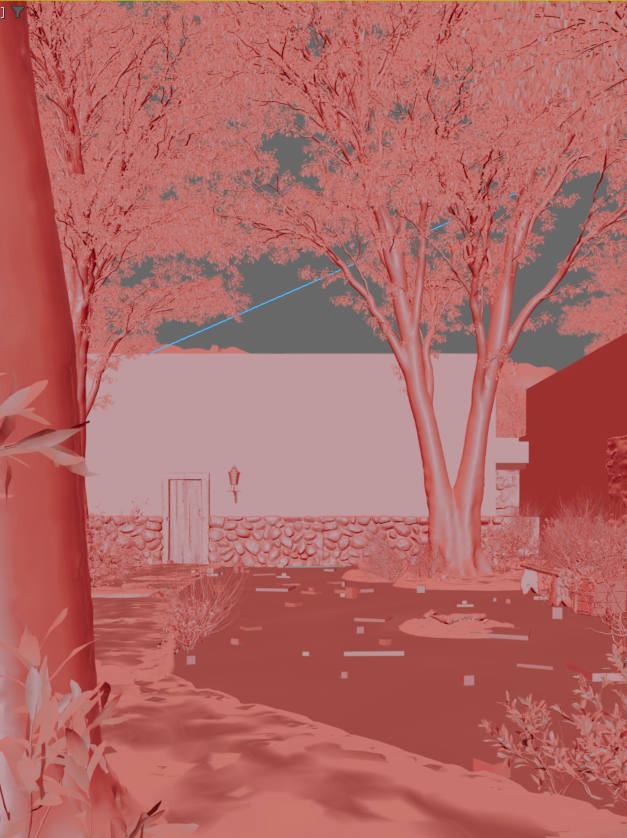
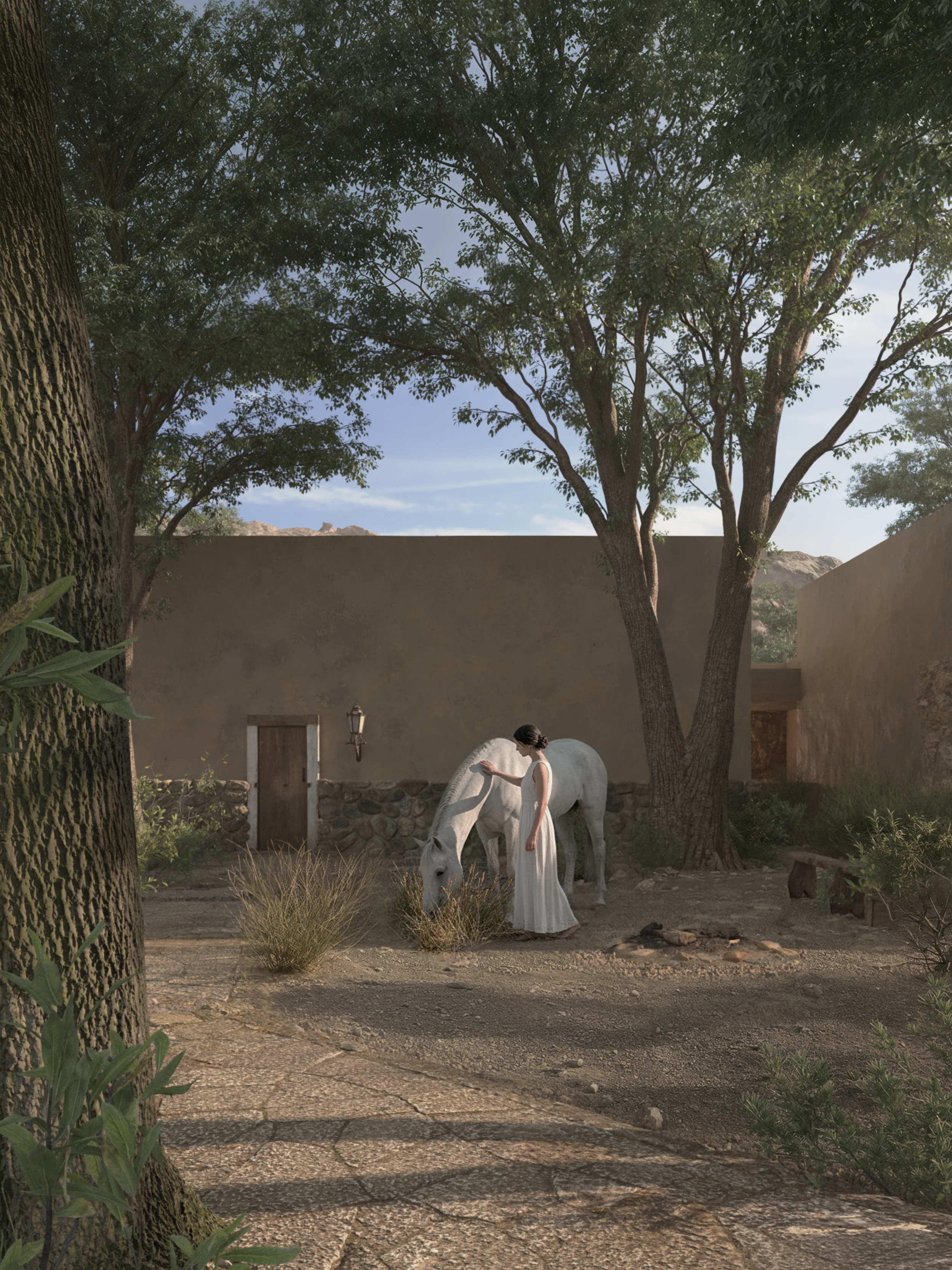
The first is the clay render stage: the model without materials, lit generically. To a technical render artist, this is an internal working file. To an Architect-Led studio, it's a first conversation with the project — does the proportion work? Is human scale resolved? Does the tree accompany the built mass or compete with it?
The second is the final image. If you compare them, there are dozens of decisions in between: light, material, atmosphere, post-production. But the intent was already there. It wasn't invented in post: it was prefigured in the clay.
That continuity is what makes the final image not feel made up. It holds because it was born that way.
When it makes sense to choose an Architect-Led studio
It isn't always the right answer. Let's be honest.
- Competition entries. Where the jury is made up of architects who will read the image with the same lens we used to make it.
- Premium developments and signature work. Where the buyer or investor can tell the difference between a generic image and one that respects the project.
- Work bound for publication. ArchDaily, Dezeen, sector magazines. They don't care about photoreal per se; they care that the image tells something.
- International projects from your studio. Where the presentation has to match the level of the work.
When it doesn't
The same applies the other way:
- Catalog volume. If you need eighty identical typologies of a multifamily prototype, go to a factory. You'll pay less and the result will be coherent with the use.
- Quick exploratory renders. To iterate internally at the studio you don't need this level. A technical render is enough.
- Work that's check-the-box regulatory. If the city asks you for a render for the file and nobody else will see it, this isn't our place.
Being useful also means telling you when we're not the right call.
The summary
Architect-Led Visualization isn't a more expensive service: it's a different one. The difference isn't billed by the hour or by the image. It's paid for the decision that the person framing the image understands the project the way the person who designed it did.
That continuity shows. Sometimes in what's shown. Almost always in what was chosen not to show.
If your project falls into the "when yes" list, it's probably worth a conversation. If you're in the "when not," it's also useful to know that before commissioning.